
Lending & growth
Loan Origination System
Make the next lending decision easier to reach.
A loan application should arrive at the next reviewer with a clear history and the information they need. Arukus LOS helps lending teams organise the journey from first capture to a documented decision.
Plan your product walkthroughGive the application a structured starting point: customer details, documents and the information needed for the next check.
One lending journey.
Different responsibilities. Clearer handovers.
Explore the supplied product screens to see how field capture, bureau review, branch verification and management oversight fit into the loan-origination journey.
The field team’s next task, in one place.
A role-specific workspace brings the application and its supporting activities into view, helping field users see which task comes next.
- Application, group formation and CGT entry points
- Consent, e-sign and eKYC activities in the workflow
- History and recommendation options alongside the case
The supplied CSR workspace includes both active and inactive activities.
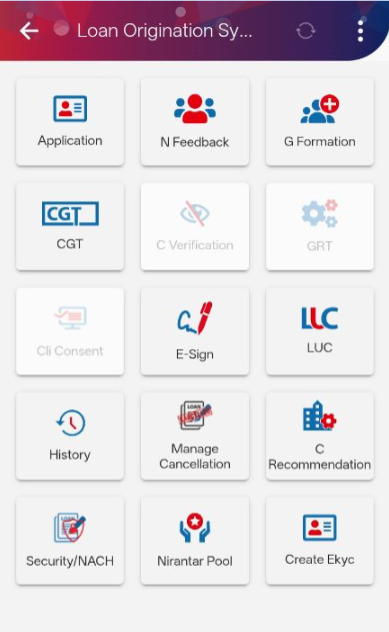
Screens show a configured implementation. Available activities, integrations, permissions and terminology are confirmed for your institution. Some customer fields are masked in the supplied mobile images; client branding is covered in the dashboard view.
What makes Arukus LOS different?
The distinction is in the detail between application capture and an authorised decision. Arukus LOS connects configurable lending rules, field verification, group workflows and central review in a process your teams can follow.
Rules that reflect the operating model
Product and eligibility settings can reflect regional pricing, branch exceptions, indebtedness limits, DPD ranges and customer-cycle criteria. Forms, activity steps and user assignments can be configured around the lender’s approved process.
A branch exception can follow a defined rule and review responsibility instead of relying on an undocumented workaround.
Configuration, verification providers and integration scope are agreed for your lending process.
Lending teams should be able to explain where an application stands, what is missing and who needs to act next. Arukus LOS provides a structured application journey for MFIs and NBFCs, with configuration and integrations matched to the lender’s process.
What better could look like
Make applications reviewable
Bring required information and verification records to the next team.
Reduce uncertain handovers
Keep outstanding information and the next responsibility visible.
Retain the decision context
Connect the authorised decision with the relevant application history.
Field or sourcing employee
Captures required application information.
Branch reviewer
Checks the relevant field and customer records.
Central checker
Reviews the application within assigned authority.
Lending operations head
Reviews outstanding stages and operating reports.
Build the decision on a better handover.
Move from an application record to an authorised lending decision.
Customer capture
Collect onboarding, KYC, income and expense information.
TO EXPLORE
Give the application a clear route
The existing product covers online and offline onboarding, identity capture, phone verification, income and expense information, product eligibility and loan application data. KYC workflows include document images, Aadhaar masking, OCR-based checks and location capture. External verification services require agreed integrations.
For group lending, documented stages include group formation, neighbour feedback, cross-verification, training and recognition tests. Central checking supports approval or rejection, while document handling covers pre- and post-loan records. Bank verification, signing and disbursement interfaces are scoped to the implementation.
Reduce uncertainty at the handover
The point of a structured journey is to make the next decision understandable. A reviewer needs to know which records are current, which checks have completed and whether an exception requires clarification.
During discovery, we work through a completed application and one that was returned for correction. This reveals where responsibilities overlap, which information arrives late and what must be visible before work moves forward. Those examples are more useful than designing only for an application that passes every check first time.
Keep the operating model recognisable
A lending process may differ by product, branch structure, customer segment or approval authority. The rollout should begin with the process the institution actually operates, including the point where a central team takes over from the field.
Agree the stage names, responsibility for outstanding information and the conditions for returning work. Where the existing process needs improvement, make that change explicit rather than hiding it inside a screen redesign. The LOS should help staff follow an agreed process consistently.
Treat interfaces as part of delivery
A successful handover between systems needs more than an endpoint. Both teams need to agree which system owns the record, how a failed exchange is identified and who resolves an inconsistency.
The walkthrough is an opportunity to list the systems already in use and identify the sample data and technical owners needed for integration work. Availability of a third-party service, commercial access and institution-specific requirements must be confirmed before a connection is promised.
Plan a rollout people can operate
Start with a defined lending journey and representative cases. Test how staff handle missing information, a returned application and a delayed response from another system. Establish which reports each supervisor needs to manage outstanding work.
A pilot should create a shared understanding of the workflow, configuration and operating responsibilities. It should not rely on an unsupported claim about percentage improvements in approvals or default rates. We will agree measurable review criteria with your team before implementation.
What we can cover in a walkthrough
- Capture an application
- Check required information
- Route for assessment
- Record the authorised decision
Useful examples to bring: Application form; returned application; integration map
Where the product can help
Applications moving between field and branch teams
Required information should remain with the application as responsibility changes. A configured route makes the review sequence clearer and helps teams identify what is still missing.
Different loan products, different requirements
A lending institution may need different information or review rules for each product. Discovery should map these differences before agreeing configuration and system connections.
Questions for a considered decision
Is LOS the same as the Digital Lending App?
The products address connected but different parts of lending. We review your customer and staff journeys to identify the appropriate scope rather than assuming either product includes every function of the other.
What should we bring to a walkthrough?
Bring a completed application, a returned application and your current process map. These make it easier to discuss the information, responsibilities and exceptions that matter.
Will it connect to our existing systems?
We assess the interfaces and access available from the applications involved. The technical owners and representative data should be included in the integration discussion.
Can we start with one lending product or branch group?
A focused first release lets your team review application capture, verification and approval responsibilities before expanding. Agree which lending products, branches and exceptions belong in the initial scope.
What information should we bring to a demonstration?
Bring an anonymised application, your verification checklist and the approval matrix. Include a returned or incomplete application so the walkthrough covers the work reviewers actually handle.
What does implementation involve?
We agree configuration, data preparation, required interfaces, acceptance examples, training and rollout responsibilities. The delivery plan follows the scope.
How are deployment and integrations decided?
We review the chosen product, available interfaces, hosting requirements and operating owners. A named external system is not assumed to be connected out of the box.
Capabilities to explore in your walkthrough
- 01Online and offline customer onboarding
- 02KYC capture, masking and verification interfaces
- 03Income, expense and eligibility information
- 04Group, training and field-verification workflows
- 05Role-based central checking and application decisions
- 06Pre- and post-loan document handling
A practical next step, when the process is ready.
A proposed document assistant could identify missing application information or prepare a source-linked summary for a reviewer. Lending decisions and policy exceptions would remain with the institution’s authorised people and approved decision framework.
Discuss an AI pilotResources for your evaluation

From Loan Application to Collection Follow-up: Where Lending Handovers Break Down
Lending visibility depends on the handovers between application capture, field review and continuing customer follow-up.
ExploreSee Loan Origination System in the context of your business.
Bring a sample process, a recent operating report and the people responsible for the work. We will focus the walkthrough on your requirements, available configuration and implementation scope.
Plan your product walkthrough